
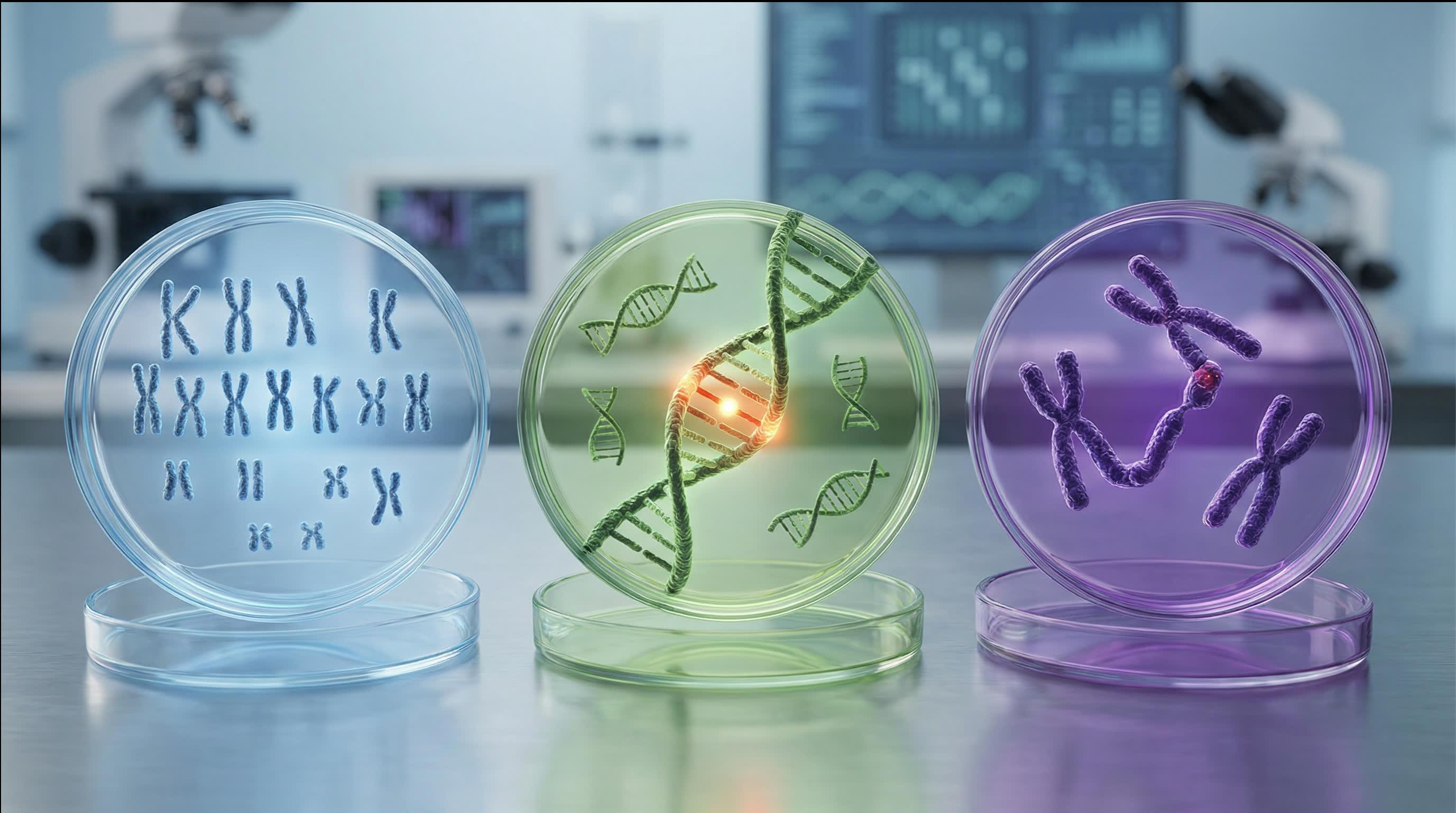
Difference Between PGT-A, PGT-M, and PGT-SR: Comprehensive Explanation

Manar Hegazy

Majd Eddin Khaled
When couples decide to use assisted reproductive techniques such as IVF or ICSI, they may hear about genetic testing of embryos (PGT) in its various types. But what is the difference between PGT-A, PGT-M, and PGT-SR? And which one is suitable for their situation? These are very important questions that deserve clear and accurate answers. In this comprehensive article, we will explain the basic differences between these three types of genetic tests, how each one is used, and when it is appropriate for your case.
Preimplantation Genetic Testing for Aneuploidies (PGT-A)
PGT-A stands for "Preimplantation Genetic Testing for Aneuploidies" and means testing embryos before implantation to search for numerical chromosomal abnormalities with very high accuracy.
What Does PGT-A Detect?
- Presence of an extra chromosome (such as Down syndrome – extra chromosome 21)
- Missing chromosomes (such as Edwards syndrome)
- Any obvious disorder in total chromosome number
Why Is PGT-A Very Important?
- Helps select embryos with completely normal chromosomal structure
- Increases chances of successful implantation and stable pregnancy
- Significantly reduces miscarriage risk
- Reduces probability of pregnancy with chromosomally abnormal fetus
When Is PGT-A Used?
- In women over 35 years old (where abnormality risk increases)
- In cases of unexplained recurrent miscarriage
- When there is family history of chromosomal disorders
- When there are multiple failed IVF or ICSI attempts
- When desiring to increase chances of successful pregnancy
Preimplantation Genetic Testing for Monogenic Disorders (PGT-M)
PGT-M stands for "Preimplantation Genetic Testing for Monogenic disorders" and means testing embryos before implantation to search for specific hereditary diseases transmitted through individual genes with high accuracy.
What Does PGT-M Detect?
It detects whether embryo carries a hereditary gene causing a known and specific disease, such as:
- Thalassemia (Mediterranean anemia)
- Sickle cell anemia
- Cystic fibrosis
- Duchenne muscular dystrophy
- Hemophilia (bleeding disorder)
- And other known hereditary diseases
Why Is PGT-M Very Important?
- Allows couples carrying hereditary diseases real and safe opportunity to have a completely healthy child
- Prevents hereditary disease transmission to future generations permanently
- Reduces anxiety and fear of disease transmission
- Gives couples a safe and reliable option
When Is PGT-M Used?
- When couple or one partner carries a single-gene hereditary disease
- After precisely identifying affected gene through DNA analysis
- Before resorting to IVF or ICSI
- When there is family history of specific hereditary diseases
Preimplantation Genetic Testing for Structural Rearrangements (PGT-SR)
PGT-SR stands for "Preimplantation Genetic Testing for Structural Rearrangements" and means testing embryos before implantation to search for structural chromosomal abnormalities.
What Does PGT-SR Detect?
It detects reorganization in shape or arrangement of chromosomes, such as:
- Translocations – where part of chromosome moves to another
- Inversions – where part of chromosome is reversed
- Deletions – where part of chromosome is deleted
- Duplications – where part of chromosome is repeated
Why Is PGT-SR Very Important?
- Helps avoid pregnancy with structurally abnormal fetus
- Increases chances of stable and successful pregnancy
- Reduces recurrent miscarriage risk
- Helps understand cause of previous miscarriages
When Is PGT-SR Used?
- When one or both partners carry structural chromosomal abnormality
- In cases of unexplained recurrent miscarriage
- When there is previous child with structural chromosomal abnormality
- When structural abnormality is discovered in parent during routine screening
Comparison Table of Three Types
| Criteria | PGT-A | PGT-M | PGT-SR |
|---|---|---|---|
| What It Detects | Numerical abnormalities | Hereditary diseases | Structural abnormalities |
| Primary Use | Women over 35 years | Hereditary disease carriers | Structural abnormality carriers |
| Main Benefit | Increase pregnancy chances | Prevent disease transmission | Avoid recurrent miscarriage |
| Relative Cost | Moderate | Relatively high | Moderate |
Does Every Couple Need One of These Tests?
The answer is: No, not every couple needs genetic testing of embryos. These tests are used based on family medical history and individual health condition of each couple. Decision to use one type of PGT is made after consulting fertility specialist and analyzing couple's condition with high precision.
Factors That Determine Need for Genetic Testing
- Age (especially if woman is over 35 years)
- Family medical history
- Number of previous failed IVF attempts
- Number of previous miscarriages
- Presence of known hereditary diseases
- Quality of eggs and sperm
Conclusion and Key Points
PGT-A, PGT-M, and PGT-SR are not just additional tests, but important medical tools that greatly help improve IVF results, reduce miscarriage rates, and prevent transmission of hereditary diseases to future generations. If you or your partner belong to advanced age group, or have history of recurrent miscarriage or hereditary diseases, choosing appropriate type of genetic testing can be real key to achieving stable pregnancy and safe, healthy delivery.
At Fertiliv IVF Center, we believe that embryo genetic testing is part of integrated care targeting your health and your baby's health. Our medical team provides you with precise consultation and selection of most appropriate test based on your individual health condition. You can contact us now to learn more about types of genetic testing or visit the clinic directly for comprehensive consultation.
Frequently Asked Questions About Genetic Testing Types
Yes, in some cases PGT-A and PGT-M can be performed together to provide comprehensive embryo testing.
Usually takes 7 to 14 days depending on test type and laboratory used.
Yes, testing is completely safe and does not affect embryo's ability to grow and develop normally.
No, testing increases chances of success but does not guarantee 100% successful pregnancy.